

The January Weird
#76: Britannia waives the rules, eye on Iran, Lovejoy comes for VPNs, the edifice complex, Grok-blocked, don't believe (all) the shite, Big Apple Brother, Mark of the Beast: Legal Edition


Welcome back to your Weekly Weird, our shared sandbox for exploring the deplorable and laugh-crying at the inevitable.
2026 is coming in hot, folks. With so much going on, your humble correspondent has been outpaced by events and so here is a temporarily renamed monthly Weird to catch us all up.
In case you missed it, the most recent episode of the podcast featured Professor Richard Youngs of the Carnegie Endowment for International Peace talking about the besieging of democracy from without and within:

Our guest in this Sunday’s episode is Nell Watson, a machine intelligence engineer, ethicist, and philosopher. We went deep on the current and future capacity of AI, so make sure you check it out.
Here’s one of Nell’s TEDx Talks as an amuse bouche. Seriously, amuse your bouche:
Let’s get Weird!
Gangsta-In-Chief
To kick off the year, the Trump administration facilitated the infiltration of Venezuela and the subsequent exfiltration of ‘President’ Nicolas Maduro. While feathers were all aflutter in the commentariat at the questions this raised around sovereignty, unilateral action, and “might makes right”, yours truly found the most striking element to be the bizarre, inappropriate, yet entirely-on-brand-for-the-bad-timeline use of gangsta rap (complete with the n-word) to crow about the rendition/kidnapping of Maduro on the official White House X account.

Candidate Of The Month
An up-and-comer standing in a local election in Birmingham, Britain’s ‘second city’:
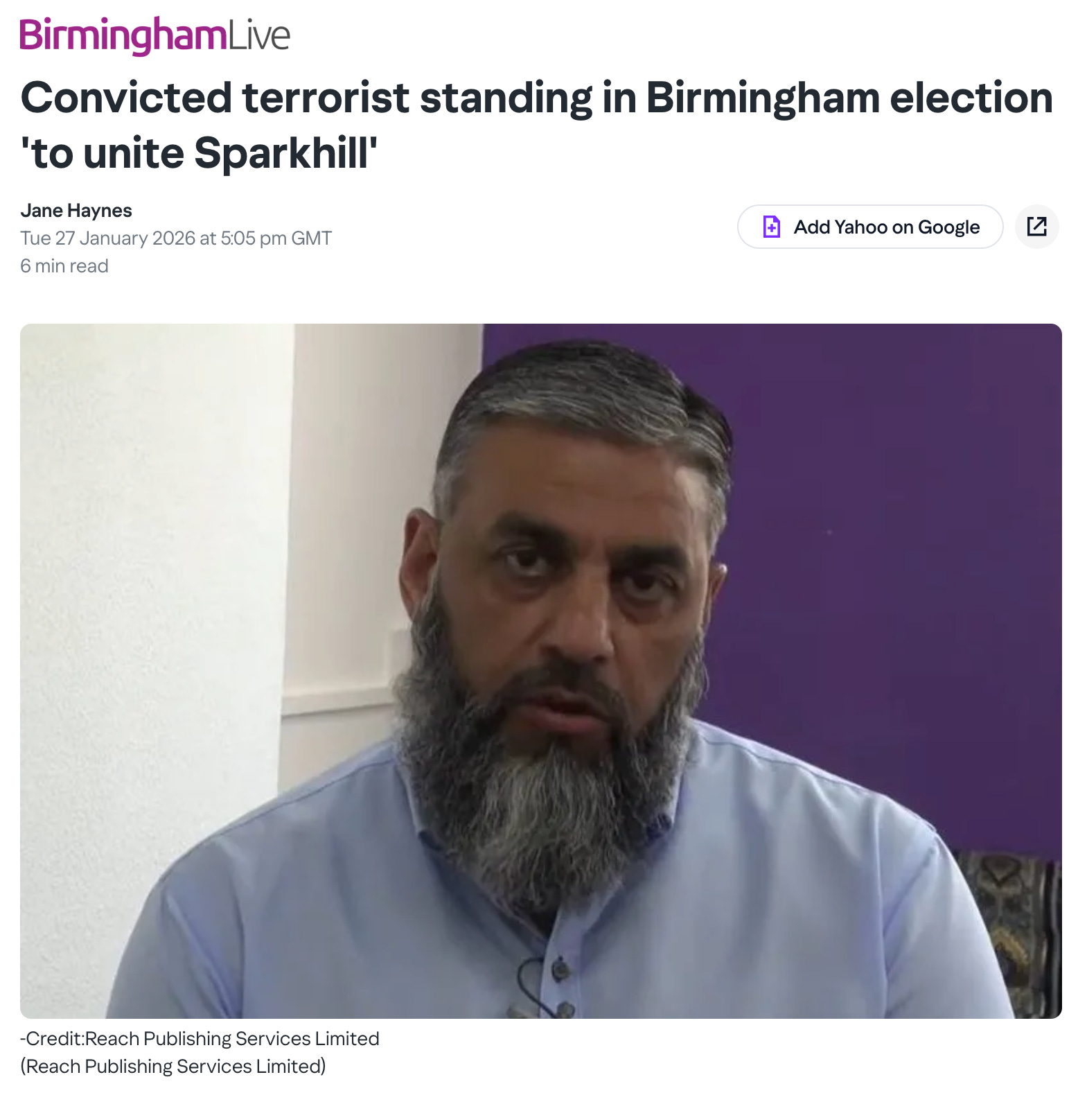
Meet the definitely-totally-reformed-and-not-at-all-problematic-as-a-political-candidate Shahid Butt.
Butt was convicted on terror charges in 1999 amid claims he was part of a terrorist enterprise conspiring to terrorise Yemen. He was found guilty of forming an armed gang and conspiring to bomb the British consulate, an Anglican church and a Swiss-owned hotel in Yemen.
The group was supposedly linked to Islamic radicals who kidnapped 16 Westerners in 1998, four of whom were killed. They were accused of being sent to Yemen by radical cleric Abu Hamza.
Butt always proclaimed his innocence and says that he confessed under severe torture. He was later jailed for five years.
Obviously, as an innocent man wrongly accused, he’d eschew the kind of violence he was accused of, right?
Asked about his violent past, he said: "I am not a pacifist. If someone attacks me...I am not just going to turn the other cheek, I am going to defend myself. I will (also) be pre-emptive, as the law advises me, if I feel like my life is threatened, or my family, I will do a pre-emptive strike.
Okay, fair enough if you’re worried about your life or your family. But certainly someone reeling from the injustice of being branded a terrorist despite not being one would be at great pains to make clear that violence, as a rule, is not their preferred modus operandi? Especially if, as a political candidate, they are tasked with setting an example for the community they are running to represent. Nobody in that position would just straight up tell people they advocate violence, right?
“Muslims are not pacifists...if somebody comes into your face, you knock his teeth out, that’s my message to the youth.”
Chef’s kiss. Don’t forget your photo ID when you head to the polling station.
Don’t Believe (All) The Shite
Straight out of the gate, this year delivered with the following Reddit post by Trowaway_whistleblow [sic] going viral on social media. A developer for “a major food delivery app” got drunk and angry and decided to spill the beans on how twisted their system is.


With tech platforms functioning in a notoriously opaque fashion and often getting outed for attempting something horrible like behaviour modification or gouging their gig workers, it’s easy to believe the worst when someone comes out and says it.
We have a hidden metric for drivers that tracks how desperate they are for cash based on their acceptance behavior.
If a driver usually logs on at 10 PM and accepts every garbage $3 order instantly without hesitation, the algo tags them as "High Desperation." Once they are tagged, the system then deliberately stops showing them high-paying orders. The logic is: "Why pay this guy $15 for a run when we know he’s desperate enough to do it for $6?" We save the good tips for the "casual" drivers to hook them in and gamify their experience, while the full-timers get grinded into dust.
That sounds horrifically predatory, so much so that Tony Xu, the CEO of DoorDash, responded to the allegations by categorically denying that his company would ever do something like that:
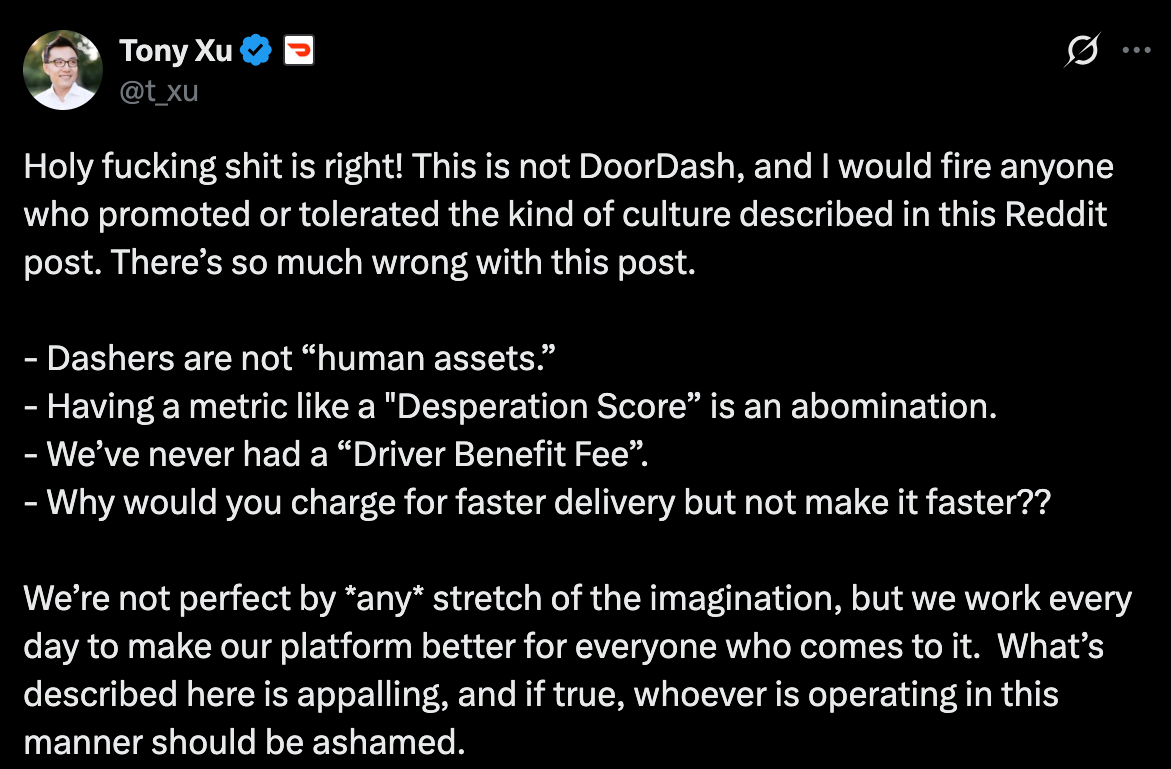
Then Pangram Labs weighed in on the original Reddit post:
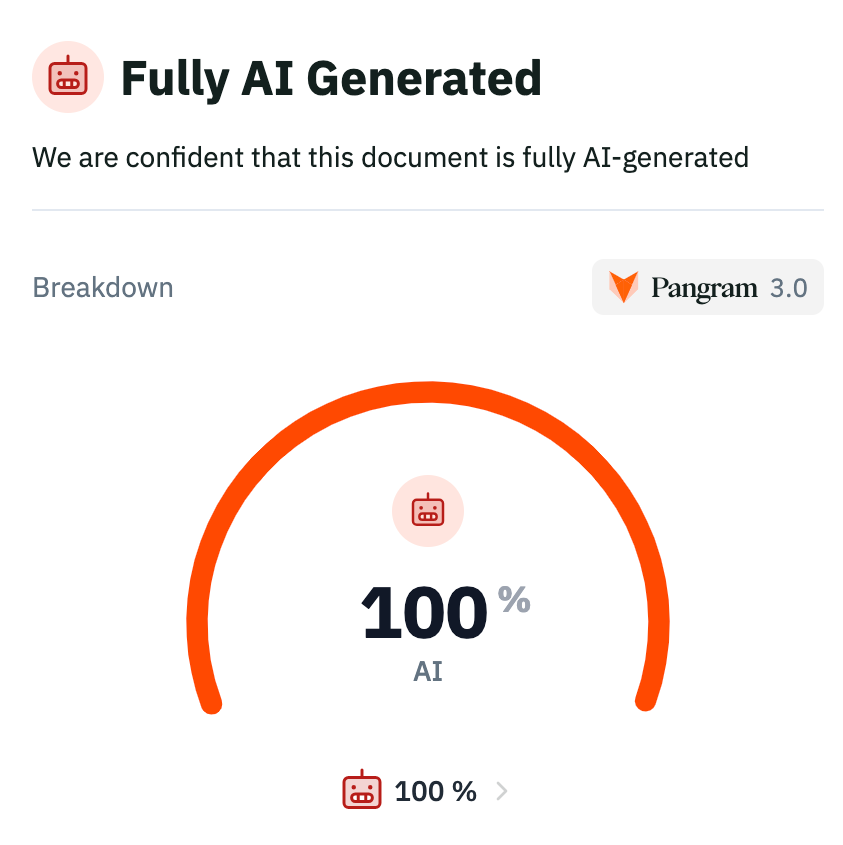
Using AI to determine if something is AI is an increasingly common technique, but that alone wasn’t enough to fully debunk the alleged whistleblower’s allegations. Alex Shultz at Hard Reset strapped on his lumbar girdle and did the heavy lifting. He got in touch with Trowaway_whistleblow on Signal to seek corroborating information.
They sent over a photo of a purported Uber Eats badge, with “senior software engineer” visible, but their name and face blacked out. I told them that I appreciated it, but in truth, the photo was useless.
Casey Newton also covered the story and shared the picture, which he later determined was generated by Gemini.1
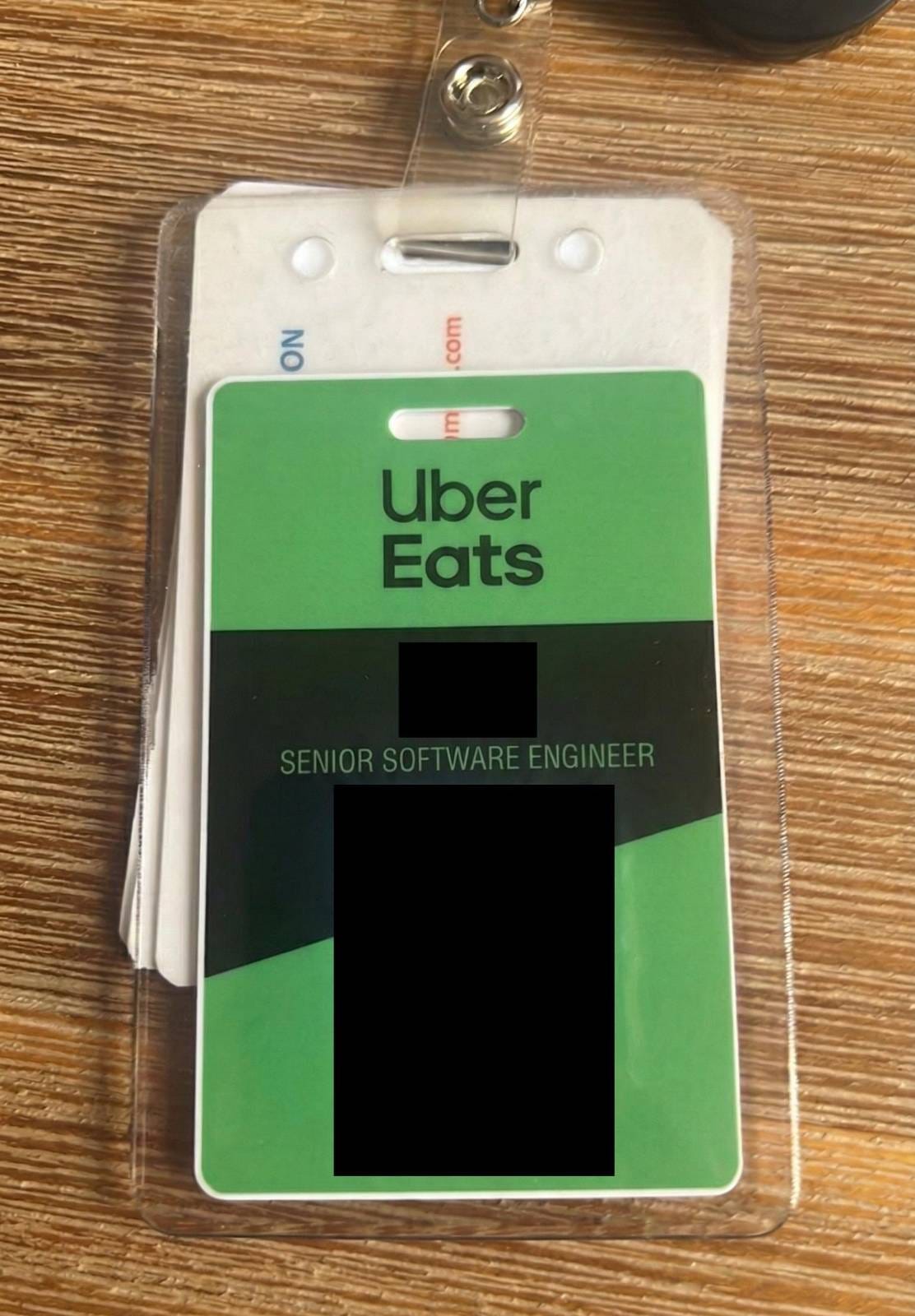
Shultz pressed for more:
Maybe realizing they needed to up the ante, Trowaway_whistleblow sent over what they claimed were “internal company documents that would corroborate my points.” They attached a PDF that I fully admit fooled me on my first read. I’m not going to get into too many details, because the document is fabricated and libelous. I will say this: the document’s cover page cites a made-up group with a very similar name to a real product group at Uber. The document is watermarked as “confidential.” Its contents feature lots of corporate-speak euphemisms for delivery drivers that are alarming, but not necessarily fake-sounding. (To reiterate, they are fake! Not real!) The document basically explains how to rip off delivery drivers in order to maximize profits, with supplementary graphs and charts intended to make everything look more official.
Newton also received the document, titled AllocNet-T: High-Dimensional Temporal Supply State Modeling. He shared it here, “so you can see the state of the art in efforts to trick reporters.”
Newton candidly describes the difficulty of reporting on technology in the age of AI:
I wish I could tell you that I immediately clocked the document as a fake. The truth is that it initially fooled me. Laden with charts, diagrams, and mathematical formulas, the document closely resembled many AI-related papers that I have read (and perhaps half-understood) over the past few years. I lacked the technical knowledge to discern that, as plausible as it may have looked in some places, the document was nonsense.
And the longer I read, the more outrageous the document got. It ends by saying the company is exploring the use of Apple Watch data to identify drivers in states of distress, who may be willing to accept worse payouts. It also proposes listening to them via their phone’s microphones to “detect ambient vehicle noise (crying, arguments) to infer emotional state and adjust offer pricing accordingly.” In my state of wishful thinking, it looked like a smoking gun.
Shultz continued corresponding with the ‘leaker’.
As we exchanged a few more messages, I found Xu’s post, where on behalf of DoorDash he disavowed the allegations in Trowaway_whistleblow’s Reddit thread. And then I saw a number of responses to Xu that the Reddit post was clearly AI-generated.
Shultz then “messaged Trowaway_whistleblow again” to ask: “Had they seen the accusations that they generated their Reddit post with AI?”
They wrote back that AI detectors are not reliable, and sent a link to a Forbes article about how detectors don’t work. I was immediately much, much more suspicious.
Shultz involved his colleague Ariella Steinhorn to help get to the bottom of what was now shaping up to be an elaborate, confounding hoax.
Steinhorn shared my skepticism about the veracity of Trowaway_whistleblow’s claims, but we were both at a loss about the why. This endeavor took a fair amount of work and effort. For what purpose, exactly?
Perhaps, as Alfred tells Bruce Wayne in The Dark Knight, “some men just want to watch the world burn.”
Shultz and Steinhorn sent the ‘leaked’ PDF to Uber.
We penned an email to Uber and sent them the full “internal document.” Uber responded within an hour. Kallman, Uber’s head of communications, denied everything in the Reddit thread and in the fake document. He went point-by-point over the terminology in the document, and said none of it is real. The document “includes names, systems and software that do not exist at Uber,” Kallman said. He was as definitive as you can be.
It’s not exactly new for a company to deny leaked allegations against them and then be caught out, but in this case, the weight of the evidence leans towards the ‘whistleblower’ post and supporting document being AI-generated. Shultz puts forward his take on how:
My best theory is that Trowaway_whistleblow generated the contents of the fake document with an LLM, then compiled them with LaTeX, which is basically a formatting technology. LaTeX is listed in the metadata for the fraudulent document.
(Nerdy, brief aside: ChatGPT is trained to incorporate LaTeX when it’s creating a document, but then the “where from” metadata for the document will display as “ChatGPT”; presumably, Trowaway_whistleblow wanted to obscure ChatGPT from the metadata, hence my theory that they divided their fake-document creation process into two parts. I don’t know for sure though—they might have used a different LLM, or trained their own.)
Answers on the why and the who are there none. All we know is that someone, for reasons unknown, tried quite hard to make something false seem true to as many journalists as they could before their claims were discredited.
As Aviv Ovadya told BuzzFeed’s Charlie Warzel back in 2018:
"What happens when anyone can make it appear as if anything has happened, regardless of whether or not it did?"
Looks like we might be finding out. A perfect warning shot across the bow for the coming year.
Eye On Iran
“We just don’t want the Islamic republic in power any more.”
When I wrote in December about Iran taking the cake for its white SIM scandal and assorted related hypocritical horrors, little did I suspect how much more of the cake was left for the taking.
Protests have engulfed the Islamic Republic since 28 December, with people taking to the streets to call for an end to the regime. From women sick of the headscarf and young people demanding modern freedoms to monarchists chanting “Javid Shah!” in a call to replace the ayatollah with Reza Pahlavi fils, it’s a broad coalition of discontented denizens fed up to the eyeballs with the mullahs and their necrotic despotism masquerading as an anti-imperialist revolution.
On 8 January, the Iranian government turned off the internet. Like, off. The blackout continued until 27 January, when “heavily filtered intermittent connectivity” began to return.
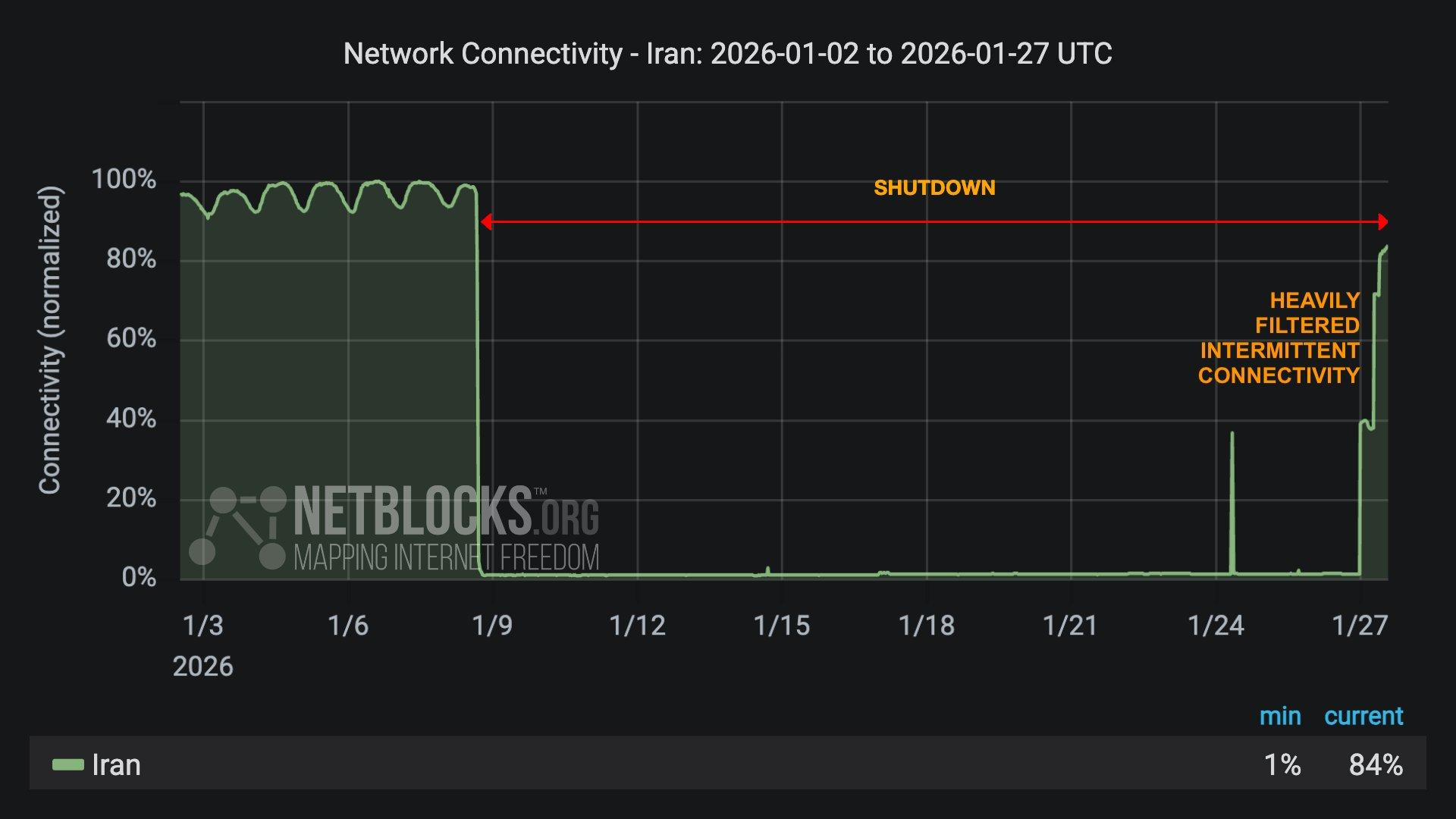
During the period of the blackout, thousands of people were murdered by the authorities in the violent effort to quell the protests.
Estimates of the number killed vary substantially, hampered by the ongoing internet shutdown. The Iranian government has acknowledged more than 3,000 dead, and the US-based organisation HRANA (Human Rights Activists News Agency), whose figures have been reliable during previous crackdowns, says it has verified more than 6,000 dead and has more than 17,000 more recorded deaths under investigation, giving a possible total of about 22,000. Other estimates from doctors based outside Iran range up to 33,000 or more.
Iran International put the number of murdered protesters even higher:
More than 36,500 Iranians were killed by security forces during the January 8-9 crackdown on nationwide protests, making it the deadliest two-day protest massacre in history, according to documents reviewed by Iran International's Editorial Board.
Amnesty International reported on the violence:
Verified videos and eyewitness accounts gathered by Amnesty International show that security forces positioned on the streets and on the rooftops of buildings, including houses, mosques and police stations, have repeatedly fired rifles and shotguns loaded with metal pellets at protesters, frequently targeting their heads and torsos. Evidence gathered by Amnesty International reveals that security forces involved in the deadly crackdown include the Islamic Revolutionary Guard Corps (IRGC), including its Basij battalions and various divisions of Iran’s police force, known by its Persian acronym FARAJA, as well as plain-clothes agents.
The Institute for the Study of War put up an animated map of the protests, showing the locations over time. It’s clear from the time-series that the 8 January internet shutdown was intended to and appears to have succeeded in preventing people from organising or knowing what was happening elsewhere in the country.
Iranian people in the Islamic Republic and outside of it have been waving the Shah’s flag, the American flag, and the Israeli flag, calling on Trump to save them from the IRGC and to facilitate the end of Khamenei’s regime.
You’d think that such an outpouring of “the will of the people”, followed as it was by an immediate bloody crackdown resulting in the killing of thousands, would be snatched up by the Western press and bien-pensant as an important humanitarian cause. Where are the open letters from actors and politicians excoriating the Iranian regime and its forces, or declaring solidarity with the people risking their lives to demand liberty?
Instead, on 9 January, the day after the massacres began in earnest and right after the regime cut the internet to the whole country, the BBC ran with “Iran's Supreme Leader Ayatollah Ali Khamenei has called anti-government protesters "troublemakers" who are trying "to please the president of the US".”
Eight days later, the BBC trickled out another tidbit:
Iran’s supreme leader has for the first time publicly acknowledged that thousands of people were killed during recent protests.
In a speech on Saturday, Ayatollah Ali Khamenei said thousands had been killed, “some in an inhuman, savage manner”, and blamed the US for the deaths.
Most of the rest of the article is about Trump’s pronouncements about the protests and threats of intervention.
Meanwhile, NPR explained Iran’s “Axis of Resistance” (the cute name for the terrorist groups it sponsors, arms, trains, and directs to attack and destabilise neighbouring countries) as “a defensive buffer, intended to keep conflict away from Iranian borders”.
On the streets, on the websites of arts organisations and universities, in the press releases and statements of activist organisations, including highly vocal Muslim groups one would assume should be in high dudgeon over the slaughter of fellow Muslims, crickets.
Anyone calling for the arrest or prosecution of IRGC and Basij members if they have dual citizenship? Any cases filed at the ICJ for crimes against humanity? Any petitions or well-funded and highly organised occupations of campuses and downtown areas to draw attention to the suffering of the Iranian people? Anyone making noise in the press about violations of international law?
Anyone?
Funny how, if a government seen as being fashionably against the commonly accepted ogres of the chattering classes does the violence and the horror, none of their principles seem to surface.
The Financial Times describes Iran’s effort to build a “halal internet” to keep Iranians from communicating with the outside world in times of upheaval, and quotes one protester’s explanation of the impetus behind the unrest:
“We just don’t want the Islamic republic in power any more,” said one 67-year-old man, a military veteran who was injured fighting for the regime in the Iran-Iraq war in the 1980s. “We see nothing but embezzlement. We struggle to afford food while the regime’s affiliates vacation in Europe and Canada.”
Dr Nayana Prakash summed it up as follows for Chatham House:
There can be no free and open internet under the current regime. Any response to Iran’s internet blackout must be understood as inseparable from the wider political crisis facing the country, and from the regime’s determination to control not only information, but indeed the very conditions under which Iranian life can be imagined.
Get the memo, world. The Persian people are saying ممنون، اما نه ممنون2 to the mullahs, and about time too.
Lovejoy Comes For VPNs
The same Labour government that quashed a national inquiry into the rape gang scandal in which an unconscionable number of children, mostly girls, were trafficked, drugged, and sexually molested across the UK for decades is pushing the Children’s Wellbeing and Schools Bill for “the safeguarding and welfare of children”.

The House of Lords have agreed an amendment to the Bill that would “prohibit the provision of VPN services to children in the United Kingdom”. Of course, in practice that means VPN providers will have to require “age assurance” from “any person seeking to access its service in or from the UK” to determine “whether or not that person is a child”.
The reality is that, whatever the government decides, children who go seeking access such systems and content will always find a way to circumvent any measures that are introduced – just as they always have done (e.g. people can create their own VPNs). Instead, it often ends up being the innocent and harmless online services and security systems that could be hurt the most by the sledgehammer approach to age-gated internet censorship.
A disclaimer at the end of the article referenced an inability to comment on the article for fear of falling foul of UK law on the promotion of VPNs, as per a government diktat they reported on in July 2025:
The UK government has warned that online platforms which “deliberately target UK children and promote [Virtual Private Network] use” could now “face enforcement action, including significant financial penalties”. The statement comes after many people – ironically mostly adults – rushed to adopt VPNs to avoid the wide adoption of age verification.
Congratulations, Britain. You’re another step closer to Chinese-style internet controls.
The Edifice Complex
Speaking of Chinese-style controls, the Labour government also just approved the construction of a Chinese “mega-embassy” in the heart of London.
Dan Jarvis, the Minister for Security, made a statement in Parliament dismissing security concerns and justifying the decision. He said that “[o]f course we recognise that China poses a series of threats to UK national security, from cyber-attacks, foreign interference and espionage targeting our democratic institutions to the transnational repression of Hongkongers and China’s support for Russia’s illegal invasion of Ukraine,” but “following deep scrutiny by security officials, the Government have been able to conclude that we can manage the security concerns related to the embassy.”
The Telegraph put together a handy video about it. Try to ignore the fact that the presenter looks like he’s in a hostage ransom tape:
Grok-blocked
Malaysia and Indonesia have blocked the generative AI function on X known as Grok.
The Grok chatbot, accessed through Musk’s social media platform X, has been criticized for generating manipulated images, including depictions of women in bikinis or sexually explicit poses, as well as images involving children.
The Indonesian government commented primly on the errant behaviour of Musk’s naughty bot:
“The government sees nonconsensual sexual deepfakes as a serious violation of human rights, dignity and the safety of citizens in the digital space,” Indonesian Communication and Digital Affairs Minister Meutya Hafid said in a statement.
Isn’t it nice to know that there is a morally upright government out there tasking a stand for “human rights, dignity and the safety of citizens”?
Just kidding. As documented by Amnesty International, Indonesia gives no figs for any of that guff:
Thirty-six videos authenticated by Amnesty International’s Evidence Lab, along with interviews with five victims and witnesses, detailed the police’s use of unlawful force during rallies between 25 August and 1 September 2025. This included firing water cannon at protesters at close range, beating people with batons and using a dangerous model of tear gas grenade known to cause serious injuries, including loss of limb.
“Video evidence, alongside victims and eyewitnesses’ testimonies, reveal that Indonesian police ruthlessly and violently cracked down on a movement that began with peaceful marches against low wages, tax hikes and lawmakers’ pay. The authorities’ excessive and unlawful use of force lays bare a policing culture that treats dissent as a threat rather than a right,” said Erika Guevara-Rosas, Amnesty International’s Senior Director for Research, Advocacy, Policy and Campaigns.
Debora N. Gunawan writing for OpinioJuris went even further:
The Indonesian government’s response to the August 2025 protests should not be dismissed as mere “excessive force” or even as cruel, inhuman, or degrading treatment, it amounts to torture under the Convention against Torture (CAT).
She argues that “the crackdown satisfies CAT’s four defining elements of torture while also breaching Indonesia’s obligations under the International Covenant on Civil and Political Rights (ICCPR).”
Her conclusion is damning:
The [Indonesian] government’s attempts to reframe the protests as mere “chaos” rather than legitimate public frustration, and its dismissive rhetoric that mocks the suffering of its people, only deepen the gravity of these violations. Recognizing the crackdown as torture elevates the discourse from calls for reform to demands for justice, from empty apologies to genuine accountability. Faced with a government unwilling to reckon with its own abuses, many in Indonesia now look to the international community for solidarity, pressure, and meaningful intervention to ensure that their voices are not silenced.
As with Iran, solidarity, pressure, or even recognition by way of noisy pearl-clutching from the commentariat were as common as rocking horse droppings.
But yeah, tell us again about how Indonesia’s Grok-block is about “human rights, dignity and the safety of citizens”.
In response, Grok has apparently limited image generation to paying subscribers after regulators in Indonesia and Malaysia said “existing controls weren’t preventing the creation and spread of fake pornographic content, particularly involving women and minors.”
It’s so important that Indonesia wants to protect minors.
Oh, by the way, funny story…
In 2018, the BBC reported that “Indonesia is a majority Muslim country and has among the highest number of child brides in the world” and that “[a]ccording to the UN's children office Unicef, 14% of women in Indonesia are married before they turn 18 and 1% are married before they are 15.”
Detailing how a boy aged 15 and a girl aged 14 had been given permission to marry, the Beeb wrote:
The current minimum marriage age is 16 for girls and 19 for boys, but religious courts can issue exceptions and often do so.
The young bride told reporters their marriage was “destiny” and that the two initially dated for five months.
When their families found out, they immediately urged the two to get married.
The bride’s mother had also been married at the age of 14.
At least the young husband is the responsible type: “Her 15 year-old husband, who has already dropped out of school, said he would continue working to feed his family.”
Child labour much?
In 2020, calling child marriage “a prevalent and serious problem in Indonesia”, the UNFPA lauded the Indonesian government’s commitment “to decrease the current child marriage prevalence from 11.2% (2018) to 8.74% by 2024.” For anyone doing the maths, that’s a sterling commitment to take the child marriage rate down from 1 in 9…to 1 in 11.
Girls Not Brides note that, in Indonesia, despite the age of consent on paper, “parents can also ask religious courts or local officials to authorise marriages of girls even earlier, with no minimum age in such cases.”
Protect those minors, Indonesia. I’m sure blocking Grok will do the trick.
Meanwhile, that stalwart state of digital rights, the UK, has set the regulator Ofcom on Elon. On 12 January, Ofcom “opened a formal investigation into X under the UK’s Online Safety Act, to determine whether it has complied with its duties to protect people in the UK from content that is illegal in the UK.”
“It’s been drawn to my attention that a company called Al Masirah TV has been operating in this country for 10 years,” said [a] veteran Tory politician. “They are owned by the Houthis, a proscribed organisation in the United States, and there’s a risk that these people are using the opportunity to avoid our visa system, to launder money and to encourage terrorist activities in this country. This is a concern, obviously, for national security.”
Ofcom, the regulator responsible for television, does not appear to have ever investigated the presence of Al Masirah TV in the UK.
Is this really about protecting the public? Or is Musk up to something at X that quite a few governments are not in favour of?
Mark Of The Beast: Legal Edition
An employer may not request, require, or coerce any employee to have a microchip implanted in the employee for any reason.
Elon Musk’s company Neuralink has announced plans to expand its brain-computer interface (BCI) chip, The Link, to “high-volume” production this year.


“The Link” is the size of a quarter, about 23 mm in diameter and around 8 mm thick (pretty significant, compared to how big the human brain is), and reads electrical signals from neurons and translates them into digital commands. The ultimate goal is to allow users to control devices with their minds, restoring lost functionality through the device.
Sam Altman, the guy behind OpenAI, Oklo, and the super-creepy Tools For Humanity project Worldcoin (featuring the iris-scanning orb coming soon to a shopping centre near you), is also getting in on that sweet sweet brain interface action.
The Detroit News reports (emphasis mine):
Merge Labs, a company co-founded by AI billionaire Sam Altman that is building devices to connect human brains to computers, raised $252 million.
The company is being formed as entrepreneurs and investors across Silicon Valley anticipate a future where artificial intelligence is so advanced that humans will be willing - and perhaps compelled - to augment their brains to take advantage of it.
While Silicon Valley micro-dosers are dashing to shove chips into people’s brains, legislators are getting the message that implants are here and they want to pump the brakes.
GeekWire reports (in an article headed with the oxymoronic declaration that it is “Independent Coverage Supported By Microsoft”):
A bill introduced in the Washington state Legislature would ban employers from requiring or pressuring workers to be microchipped, a practice lawmakers want to prohibit before it ever becomes an issue.
House Bill 2303 was prefiled this week by Reps. Brianna Thomas (D-34) and Lisa Parshley (D-22).
The bill would prohibit employers from requiring, requesting or coercing employees to have microchips implanted in their bodies as a condition of employment, and would bar the use of subcutaneous tracking or identification technology for workplace management or surveillance.
It aims to protect worker privacy and bodily autonomy by establishing strict penalties for violations, including civil penalties starting at $10,000 and the right for aggrieved workers to sue for damages and injunctive relief.
Rep. Thomas explained why she was behind the bill despite there being no cases yet of employees being coerced into accepting an implant:
“We are getting out ahead of the problem because the practice of requiring these chips is too dangerous to wait for it to show up in Washington,” she said Thursday via email. “An employee with a microchip stops being an employee — they are essentially being dehumanized into corporate equipment.”
In a move seemingly unique in the history of American law-making, politicians are pre-empting the adoption of implants by banning them in anticipation of their rollout.
The Carnegie Council gives details, which are worth quoting at length:
Currently 13 U.S. states have passed statutes banning mandatory human microchips: Arkansas, California, Missouri, Montana, Nevada, New Hampshire, North Dakota, Oklahoma, Utah, Wisconsin, Indiana, Alabama, and most recently Mississippi. The Wyoming State House also considered a preemptive ban in 2023, but the bill was ultimately defeated for not clearly adhering to federal regulations on animal microchipping.
[…]
In contrast to other states, Nevada’s law (AB266) is arguably the most restrictive on microchip implants and permanent identification markers because it prohibits people from voluntarily electing to receive these markers in Nevada, in addition to protecting any person from being required to receive them. This dual protection is unique to that state. While not a total ban, the legislation “prohibits an officer or employee of this State or any political subdivision thereof or any other person from: (1) requiring another person to undergo the implantation of a microchip or other permanent identification marker of any kind or nature; (2) establishing a program that authorizes a person to voluntarily elect to undergo the implantation of such a microchip or permanent identification marker; or (3) participating in a program established by another person, if the program authorizes a person to voluntarily elect to undergo the implantation of such a microchip or permanent identification marker.”
In the past few years, a few other states have passed legislation on this issue. For example, in 2023, Alabama lawmakers enacted legislation to prohibit employers from mandating microchip implants. Under this law, a microchip is defined as “a device subcutaneously implanted in an individual that is passively or actively capable of transmitting personal information to another device using radio frequency identification.” Employers are required to ensure that their business practices and labor force policies comply with this preemptive ban. Of the 13 U.S. states that have enacted legislation to pre-emptively ban this technology, Alabama’s law carries one of the strongest penalties—if the law were violated, it would constitute a Class D felony.
Most recently in February 2024, Mississippi State Senator Kevin Blackwell (R) proposed Senate Bill 2088 to protect employees from forced human microchip implants. The bill prohibited employers from coercing, or threatening, employees from being microchipped. The bill also required employers to cover the cost of removing the microchip.
Wherefore cometh such diligence from America’s lawmakers? Why do they suddenly have foresight that seems to have been lacking on everything from forever chemicals to AI?
Shot:
The religious make-up of the Senate and House of Representatives is 87 per cent Christian, which is down one percentage point on the previous House membership, Pew Research has found.
[…]
The study by Pew is of data from CQ Roll Call, based on questionnaires sent to every member of Congress. It says of the 461 Christians in Congress, 295 are Protestant, down eight from the last session, although they still make up 55 per cent of members. Within this, Baptists are the largest group, with 75 members. Episcopalians number 22. Many Protestants do not specify a denomination, saying only Christian or Evangelical Protestant: 101 members said this. The number of of those identifying as Catholics has increased slightly by two, to 150.
Chaser:

Onward, Christian soldiers…
Big Apple Brother
The City reports that New York City’s Metro Transit Authority “has begun exploring whether artificial intelligence can be harnessed within the transit system to detect weapons, monitor unattended items or even anticipate subway stampedes.”
“There’s interest across the board,” Michael Kemper, MTA chief security officer, told THE CITY. “It’s not only coming from the MTA, but from the business world, the AI business world, in working with us.”
The request spells out early steps in the MTA’s shift toward possibly using AI to perform complex public-safety work, such as analyzing real-time video feeds from subways and buses and predicting potentially unsafe behavior via cameras in the transit system.
“Not only is this the norm, it’s the expected — AI is here, AI is the future,” Kemper said.
These civil service bods seem to keep forgetting that “the AI business world” is trying to sell them something, not meaningfully engage with the competing questions of public safety and personal privacy that the AI Age is throwing into focus. As shown by previous abortive attempts to get smart on the subway, the so-called solutions are rarely more than expensive, intrusive versions of existing tech.
William Owen, communications director for Surveillance Technology Oversight Project, likened the effort from transit officials to the weapons-detector pilot program that then-Mayor Eric Adams and the NYPD implemented in the subway in 2024. During a monthlong test with more than 3,000 searches at 20 stations, the AI-powered scanners turned up 12 knives, no guns and more than 100 false positives.
“It really turned out to be just a metal detector that found a lot of umbrellas and other items instead of actual weapons,” Owen said.
The latest initiative, set out in the MTA’s “request for information” from potential suppliers, seeks to leverage the surveillance network already installed on the subway.
“With more than 15,000 cameras deployed across approximately 472 subway stations, current monitoring practices remain manual, reactive and resource intensive,” it notes.
The document adds that the MTA is aiming for that monitoring setup to evolve into a “proactive intelligence-driven ecosystem, capable of flagging behavior, risk assessment and incident response.”
Jerome Greco of Legal Aid pointed out the inherent risk to public freedom posed by using “predictive technology on "unusual" or "unsafe" behavior”:
“Are we essentially now policing people for being strange?”
The Surveillance Technology Oversight Project (S.T.O.P.) posted a detailed condemnation of the MTA’s intended surveillance programme. It’s worth reading.
Britannia Waives The Rules
Home Secretary Shabana Mahmood took to the despatch box in Britain’s House of Commons on Monday and quoted Sir Robert Peel, the founder of the Metropolitan Police, before stating that the Labour government’s plan for police reform “starts with the creation of a new national police service” and “the largest-ever roll-out of live facial recognition technologies, across England and Wales”.
She continued:
When the future arrives, there are always doubters. A hundred years ago, fingerprinting was decried as curtailing our civil liberties, but today we could not imagine policing without it. I have no doubt that the same will prove true of facial recognition technology in the years to come. At the same time, we will launch police.ai, investing a record £115 million in AI and automation to make policing more effective and efficient, stripping admin away to ensure that officer time can be devoted to the human factor that only a police officer can provide.
Shadow Home Secretary Chris Philp made some counterpoints:
The Home Secretary’s plan includes mandating the merger of police forces. Briefings over the weekend suggest a reduction from 43 down to 10 or 12, so a single police force might cover an area from Dover to Milton Keynes or from Penzance to Swindon. Such huge forces will be remote from the communities they serve, and resources will be drawn away from villages and towns towards large cities. The biggest force in the country is the Met, and yet it has the worst crime clear-up rate of any force; it fails to solve 95% of reported crimes. That goes to show that large scale does not automatically deliver better results, and therefore we will oppose the mandated merger of county forces into remote regional mega-forces.
Police forces are warning that Labour’s early prisoner release scheme means more crime and more demands on policing. Most criminals will now be released after serving just one third of their prison sentence, and even rapists will serve only half of theirs. To make things even worse, Labour plans to abolish prison sentences of under one year, so even the most prolific shoplifters will never face jail. That is a recipe for disaster…
Meanwhile, the High Court is hearing “a landmark legal challenge to the Metropolitan Police’s use of live facial recognition cameras”, brought by Big Brother Watch and “a victim of police facial recognition misidentification Shaun Thompson”.
Big Brother Watch explain the reasoning behind the court case:
In 2025 alone, the Metropolitan Police scanned 4.2 million people’s biometric face data using live facial recognition cameras in public areas across the city. The force also installed the first set of permanent facial recognition cameras, scanning a shopping area in Croydon. Hammersmith and Fulham Council committed to upgrading parts of its CCTV network to include permanent live facial recognition cameras.
Big Brother Watch argue that the Met’s consistently used excuse that rolling out live facial recognition is an anti-crime measure is merely convenient language aimed at blurring the legal framework by which such technology can be used on the public.
The claimants argue that the Metropolitan Police’s use of live facial recognition breaches the right to privacy, protected by Article 8 of the European Convention on Human Rights, because the force’s policy on where facial recognition can be deployed is so permissive its use of the technology is not in accordance with law.
Police can choose to deploy live facial recognition cameras at “crime hotspots” and “access routes” to those hotspots, as well as critical national infrastructure, public events, and locations based on officers’ intelligence about crime. The claimants have submitted expert evidence which found that majority of the public spaces in London fall within the broad ‘crime hotspot’ definition”, and argue that in practice, there is no meaningful constraint on the expanse of live facial recognition deployments across the capital.
The basic problem is that there is no meaningful, clear law governing the use of facial recognition technology by the authorities in Britain.
Under the AI Act in Europe, authorities’ use of live facial recognition is generally prohibited and limited only to exceptional circumstances, such as preventing an imminent terror attack, where safeguards apply such as a clear legal basis in national law and judicial authorisation.
However, police forces have controversially used live facial recognition cameras across England and Wales since 2016 absent any primary legislation.
Police facial recognition “watchlists” include not only suspects of crime, but victims as well as “vulnerable persons”.
Police have previously populated watchlists with protesters not wanted for any offences and people with mental health issues not suspected of any crimes.
As if timed to show exactly what the government thinks of the law when it implies any form of constraint on their exercise of power and deployment of intrusive surveillance, Sky News reported on Monday that the “[p]olice [are] to get 40 new live facial recognition vans and AI help” following the Home Secretary’s announcement.
Mahmood’s National Police Service, the crown jewel of the new policy where all the reform “starts”, “will merge the existing National Crime Agency, Counter Terror Policing, the National Police Air Service and National Roads Policing all under a single organisation.”
Yeah, that’s right,. There is already a National Crime Agency doing what the NPS will do, and a Counter Terror force focused on terrorism. So all that hot air about centralising the police at the national level to free up resources in the regions for local policing is hogwash. Just another centralised government agency that will be too big, too opaque, and too unwieldy to perform properly, into which more public money and more politicians’ wind will be poured, while the end result for the person on the street is automated everything and facial recognition checkpoints waiting round any possible corner.
The publication by the Tony Blair Institute of a report called Public Service Reform in the Age Of AI ten days before Mahmood’s announcement is surely coincidental. As was the publication of the TBI report Time for Digital ID on 24 September 2025, two days before Prime Minister Starmer announced the rollout of mandatory digital ID in Britain.
In her speech to Parliament, Mahmood even had the gall to quote Peel’s famous statement that “the police are the public and the public are the police”, a cornerstone of the UK’s unique concept of “policing by consent”. Doing so while centralising the national police force, cutting back on local police, and forcing facial recognition and AI upon the citizenry without nary a whisper of real debate is the height of obnoxiousness.
At least we know one guy is happy about all this…
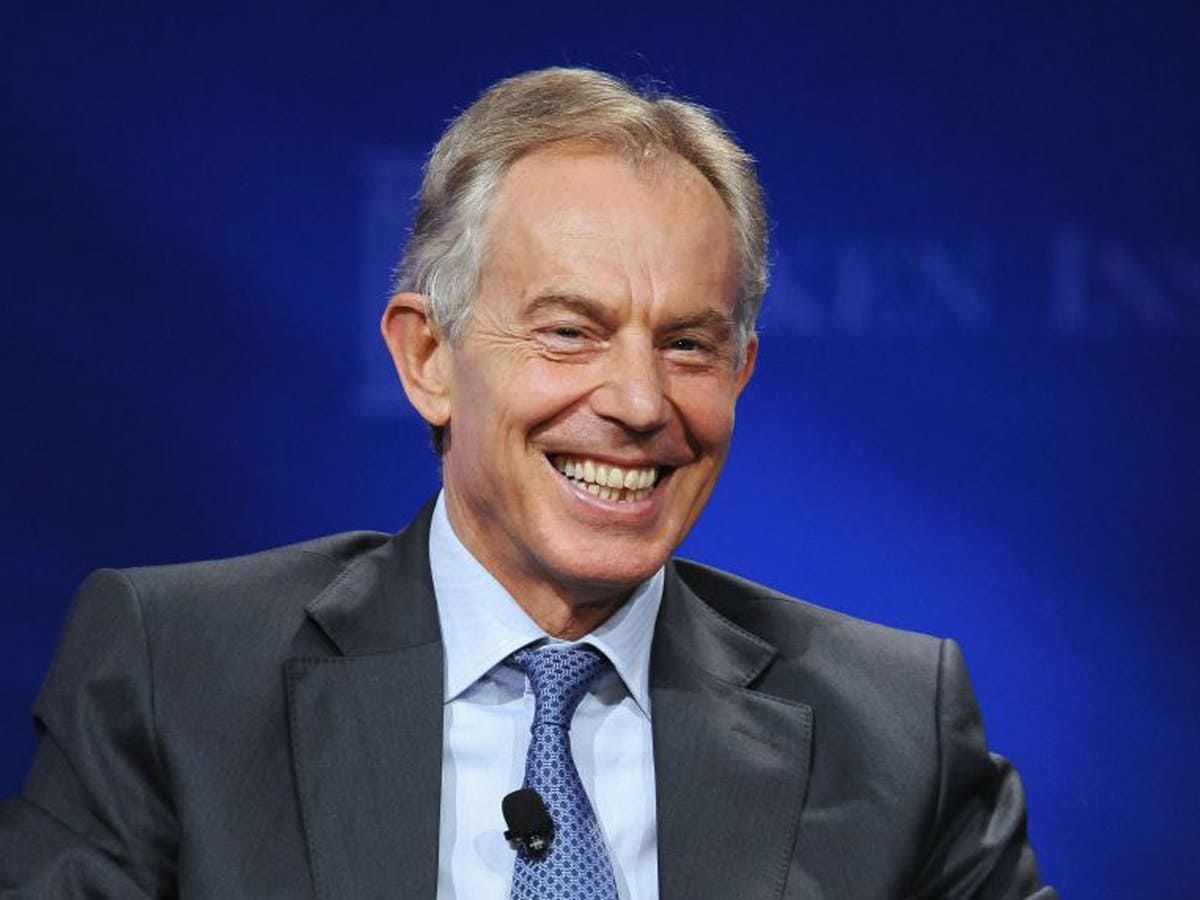
That’s it for this month’s Weird, everyone. Thank you for reading.
Outro music is a Moonic Productions reimagining of what Metallica’s Master of Puppets would sound like if it was recorded by the Beatles, dedicated to Labour’s puppet-master, the Sith Lord Blair of Baghdad.
Master of puppets, I'm pulling your strings
Twisting your mind and smashing your dreams
Blinded by me, you can't see a thing
Stay sane, friends.
“While AI systems are notoriously unreliable at identifying their own outputs, Google Gemini can detect SynthID watermarks embedded in images that it produces. I uploaded the badge to Gemini and asked if Gemini had made it. “Most or all of this image was edited or generated with Google AI,” it said.”
“Thanks, but no thanks.”
The rollercoaster ride of “As the Weird World Turns!” I believe it will change from “weird” to “tyrannical” should the Dems take control in the midterms. It’s going to be a wild ride until then!